
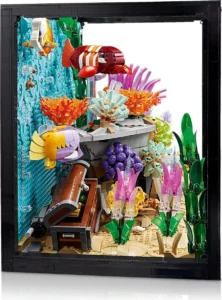


Imagine the serene beauty of a vibrant marine aquarium—the hypnotic sway of coral, fish gliding through crystal waters, the peaceful bubble of underwater life—without the weekly water changes, pH testing, or filter maintenance. That’s exactly what LEGO delivers with the Icons Tropical Aquarium (10366), a 4,154-piece mechanical marvel that transforms your living space into an underwater sanctuary. But at $479.99, this isn’t just another display set. It’s an investment in kinetic sculpture that demands careful consideration.
Having spent considerable time analyzing this set’s innovative building techniques and speaking with builders who’ve completed the journey, I can tell you this much: the Tropical Aquarium represents something fundamentally different in LEGO’s adult portfolio. It’s not merely about the final display—it’s about creating an interactive piece that rewards daily engagement rather than becoming another dust collector.
What Makes the LEGO Tropical Aquarium Unique?
Released on November 13, 2025, as part of the LEGO Icons collection, the Tropical Aquarium breaks new ground as one of the company’s most ambitious unlicensed sets. With dimensions measuring 20.5 inches wide, 14 inches tall, and 11 inches deep, this life-sized aquarium replica commands attention in any room. But size alone doesn’t justify its premium positioning in LEGO’s catalog.
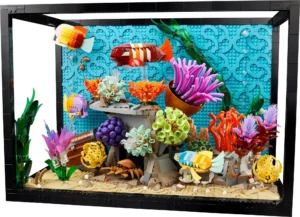
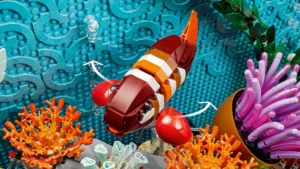
What sets this apart is its mechanical heart. Four strategically placed cranks and dials bring the underwater scene to life: rotate one mechanism and watch a rainbow fish traverse its path through the tank; turn another to see swaying coral responding to invisible currents; engage a third to reveal a crab emerging from its cave; and the fourth opens a treasure chest to expose hidden golden elements. These aren’t battery-powered gimmicks—they’re hand-cranked rituals that create what designers call “analog interaction moments.”
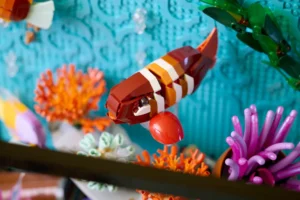
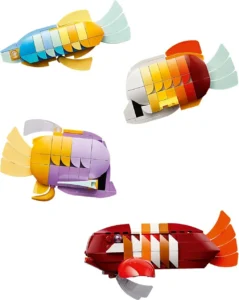
The set introduces a brand-new fin element specifically engineered for this release, deployed across four distinctive tropical fish: two angelfish sporting purple-orange and white-orange color schemes, a translucent rainbow fish with mint accents, and the designer-imagined “striped brickfish” in deep red tones. None are direct replicas of real species, but rather LEGO’s creative interpretations inspired by marine life—a decision that gives builders artistic freedom while sparking some debate among marine biology enthusiasts.
Building Experience: A Deep Dive into Construction
The construction journey spans approximately 15-20 hours across 500 instruction pages, divided into 21 numbered bags. Here’s where expectations meet reality: you won’t encounter your first fish or coral until you’re roughly two-thirds through the build. The initial phases focus entirely on establishing the structural foundation—the black frame, sandy base, and azure backdrop.
Builder’s Insight: Think of this like assembling an actual aquarium before introducing its inhabitants. While some find the repetitive tile-laying therapeutic, others wish LEGO had adopted a modular approach similar to the Botanicals line, where you could build individual elements separately and combine them later.
The engineering brilliance emerges during the coral construction phase. Designers employed sophisticated techniques including:
- Pythagorean triple positioning (3-4-5 ratios) that takes structures deliberately off the standard LEGO grid, creating more organic angles and natural-looking formations
- Mixed-orientation building where bricks stack both vertically and horizontally within the same structure, particularly visible in the cave walls and anemone mechanisms
- Towball positioning using Mixel joints that anchor elements like the angled treasure chest outside traditional grid constraints while maintaining structural integrity
- Clip-based attachment systems throughout the coral arrangements, allowing builders to reposition decorative elements and customize their aquarium’s composition even after completion
The kinetic mechanisms deserve special attention. Each uses a different gear ratio and linkage system, teaching fundamental physics through tactile engagement. The fish animation relies on a cam mechanism that creates smooth circular motion, while the coral sway uses a simple lever arm. The crab’s cave emergence initially troubled some builders with its sliding reliability, but proper attention during assembly ensures smooth operation.
Key Specifications at a Glance
| Specification | Details |
|---|---|
| Set Number | 10366 |
| Piece Count | 4,154 pieces |
| Dimensions | 36cm (H) × 52cm (W) × 28cm (D) / 14″ × 20.5″ × 11″ |
| Age Recommendation | 18+ years |
| Price (USD) | $479.99 (approximately $0.115 per piece) |
| Theme | LEGO Icons (unlicensed) |
| Release Date | November 13, 2025 (Insiders) / November 16, 2025 (General) |
| Interactive Features | 4 kinetic mechanisms (fish motion, coral sway, crab emergence, treasure chest) |
| Marine Life Included | 4 fish models, crab, oyster with pearl, sea snails, seaworms |
| Plant Elements | Coral varieties, anemones, kelp, various aquatic plants |
Advantages That Justify Consideration
Beyond the impressive piece count, several factors elevate this set above typical display models:
- Daily Interaction Potential – Unlike most display sets that you build once and admire from afar, the mechanical features invite regular engagement. Morning coffee becomes an opportunity to animate the underwater scene, transforming the aquarium from décor into a companion object. This addresses what I call “display fatigue”—when elaborate builds become invisible through familiarity.
- Color Palette Diversity – The set features one of LEGO’s most vibrant color collections in recent memory, with dozens of recolored elements that parts enthusiasts will appreciate. The translucent fins alone come in multiple never-before-seen hues, while coral elements showcase oranges, purples, and pinks that pop spectacularly under proper lighting.
- Customization Framework – The modular coral attachment system means you’re not locked into the instruction manual’s vision. Designer Sven Franic publicly encouraged builders to experiment, showing alternate configurations using different vegetation elements. Think of it as a template rather than a prescription.
- Zero Maintenance Reality – For former aquarium keepers, this resonates deeply. Real marine tanks demand weekly water testing, bi-weekly partial changes, monthly filter media replacement, and constant vigilance against algae, disease, and equipment failure. The LEGO version requires only occasional dusting. One reviewer who maintained saltwater tanks for years described it as “nostalgia without the heartbreak.”
- Educational Building Techniques – Experienced builders report discovering innovative methods they’ve incorporated into their own custom creations. The off-grid positioning, mixed-orientation building, and mechanical linkages provide a masterclass in advanced LEGO engineering.
Honest Drawbacks to Consider
Transparency demands addressing legitimate concerns that have emerged from builder feedback:
- Price-to-Value Ratio – At $0.115 per piece, this ranks among LEGO’s most expensive unlicensed sets. For comparison, the licensed Rivendell set offers 2,000 additional pieces and 21 minifigures at the same price point. The absence of intellectual property licensing fees makes this pricing particularly controversial within the community.
- Structural Padding – A significant portion of pieces goes toward the tank frame, base, and backdrop—elements that some builders find less engaging than the aquarium’s inhabitants. The frame uses a thick black outline that mimics budget aquarium designs rather than premium frameless models, which frustrated some enthusiasts expecting higher-end aesthetics.
- Fish Accuracy Limitations – Marine biology enthusiasts note the fish aren’t anatomically accurate to real tropical species. While this allows creative freedom, it may disappoint those seeking educational accuracy or species recognition.
- No Glass Panels – The open-sided design means you’re looking at a diorama rather than a sealed tank. The missing transparent panels create depth perception issues and expose the internal mechanics, which some find aesthetically compromising.
- Build Pacing Challenges – The delayed gratification of not building coral and fish until deep into construction frustrates builders seeking immediate variety. Long stretches of repetitive tile placement test patience, making this less suitable for those who prefer constant visual progression.
Display Strategies and Lighting Considerations
Placement dramatically affects this set’s impact. Unlike compact displays, the aquarium’s footprint demands dedicated space planning:
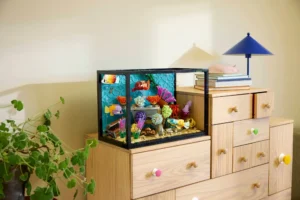
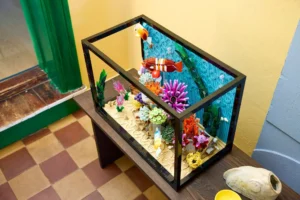
Optimal Locations: Office credenzas provide ideal viewing height and professional context. Console tables behind sofas create room dividers while allowing 360-degree appreciation. Dedicated shelf units with LED strip lighting underneath maximize the translucent elements’ light-refracting properties.
Lighting Makes the Difference: Natural lighting from nearby windows highlights the color gradient in the angelfish bodies, but direct sunlight risks fading over time. Warm LED spotlights (2700-3000K) create cozy ambiance, while cool whites (4000-5000K) emphasize the underwater atmosphere. Some builders add programmable RGB strips beneath the base for customizable mood lighting.
The Dust Reality: The open design means dust accumulation. A monthly cleaning with compressed air or soft brushes maintains vibrancy—significantly less demanding than aquarium maintenance, but more than sealed display cases require.
Who Should Buy This Set?
This aquarium finds its perfect audience in several overlapping groups:
Former Aquarium Keepers – If you’ve experienced the joy and subsequent burden of maintaining marine tanks, this offers genuine nostalgia without recurring costs. The emotional connection runs deeper than non-hobbyists might expect.
Mechanical Enthusiasts – Builders who appreciate visible engineering and kinetic sculpture will find the hand-cranked mechanisms endlessly satisfying. This appeals to the same mindset that enjoys mechanical watches or desktop physics toys.
Office Environment Enhancers – Professionals seeking conversation-starting desk décor that projects creativity and sophistication while offering stress-relief interaction during workday breaks.
Collectors of Unusual LEGO Themes – Those building comprehensive Icons collections or focusing on nature-themed builds will find this fills a unique niche that standard architecture or vehicle sets cannot.
The Value Proposition: Breaking Down the Math
Let’s address the elephant—or rather, the crab—in the room. At $479.99, does this deliver value? The answer depends entirely on your evaluation framework:
Cost Comparison with Real Aquariums: A 20-gallon marine aquarium setup (tank, stand, lighting, filtration, protein skimmer) typically starts around $800-1,200 before livestock and ongoing costs. Annual maintenance (electricity, salt mix, test kits, replacement media) adds another $300-500. Over three years, a real tank costs $1,700-2,700. The LEGO version becomes economically competitive for anyone who would otherwise maintain an actual aquarium.
Entertainment Hours Analysis: At 15-20 hours of building time plus daily interaction moments, this provides substantial engagement value. Using LEGO’s typical calculation of $30-50 per hour of entertainment, the build experience alone justifies $450-1,000 in value for enthusiasts.
Secondary Market Considerations: Early market indicators suggest this will maintain 70-85% of retail value in pristine condition, with potential appreciation if it follows the pattern of other large Icons sets. However, expect significant discounts (30-40% off) 12-18 months post-release, similar to the foosball table trajectory.
Frequently Asked Questions
Q: Can this actually hold water?
A: Absolutely not. This is a display model only, with no waterproofing or sealed construction. The instruction manual will likely include warnings against water introduction, as it would catastrophically damage the set.
Q: How stable are the mechanical functions?
A: When properly assembled following instructions precisely, mechanisms operate smoothly for thousands of cycles. The crab’s sliding mechanism requires particular attention during construction. Some builders reported initial friction that smoothed out after repeated use.
Q: Is the Gift with Purchase worth timing my purchase?
A: The Fish Tank Filter & Fish Food set (5009823) available November 13-19 adds approximately 40-50 pieces including an external filter attachment with realistic water spill effects. For completionists, it’s worth coordinating, though not essential for display quality.
Q: How does this compare to the Creator 3-in-1 Fish Tank (31122)?
A: The 2021 Creator set offered 352 pieces at $29.99 for younger builders. The Icons version provides twelve times the pieces, sophisticated mechanical features, and adult-targeted design complexity. They serve entirely different purposes despite superficial similarity.
Q: Can I modify the coral arrangement after completing the build?
A: Yes—this is one of the set’s strengths. The clip-based attachment system lets you reposition coral elements, swap plant varieties, and adjust the overall composition without disassembly. LEGO designer Sven Franic actively encourages experimentation.
Final Verdict: Is It Worth Your Investment?
The LEGO Tropical Aquarium 10366 succeeds brilliantly at what it attempts—creating an interactive kinetic sculpture that rewards daily engagement rather than passive admiration. The mechanical features transform it from static display into living art, while the vibrant color palette and sophisticated building techniques satisfy experienced builders seeking fresh challenges.
However, the premium pricing creates a significant barrier that won’t justify itself for everyone. This isn’t the set for casual builders seeking maximum pieces per dollar, nor for those wanting immediate building gratification or anatomically accurate marine species.
If you’re a former aquarium keeper yearning for that underwater aesthetic without maintenance burden, a mechanical enthusiast who values kinetic interaction, or a collector building a comprehensive Icons portfolio, this delivers unique value that transcends traditional cost-per-piece calculations. For others, waiting for the inevitable 30-40% discount 12-18 months post-release might prove the wiser strategy.
The Tropical Aquarium reminds us that LEGO’s adult offerings have evolved beyond simple nostalgia into genuine home décor and kinetic art. Whether that evolution justifies $480 depends entirely on which aspects of the hobby you value most—and whether you’re willing to pay premium for genuinely unique experiences rather than conventional display pieces.